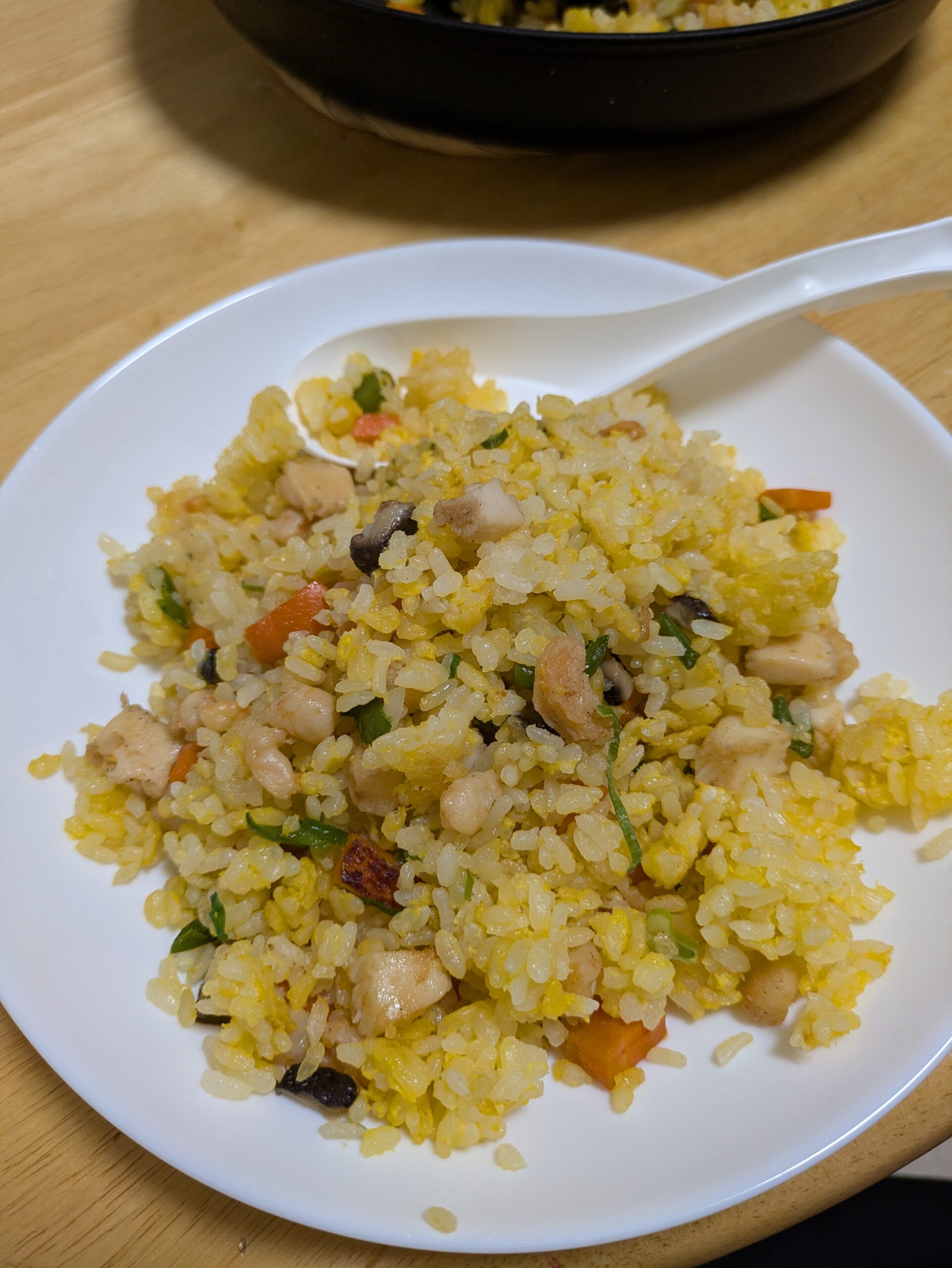
Vietnamese Seafood Fried Rice (Cơm Chiên Hải Sản)
This is a Vietnamese home-style dish I cook very often.
It is quick to make, not complicated, and easy to adjust to each family’s taste.
In our home, this dish appears regularly because it works well for both adults and kids.
I learned the base idea from a Vietnamese cooking article and various YouTube videos.
After that, I cooked it many times at home, selecting and adjusting the steps to suit my family
and the ingredients that are easy to find in Japan.
This is the way I actually cook Vietnamese seafood fried rice at home.
Ingredients (3 servings)
I usually measure rice using a regular rice bowl.
For 3 people, I use 3 bowls of rice.
If I want a little extra for seconds, I prepare 3 + 1 bowls.
- 3–4 bowls cooked rice, cooled (Japanese short-grain rice)
- 3 eggs
- 150 g shrimp, peeled and deveined
- 100 g squid, cleaned and sliced
- 3–4 fresh shiitake mushrooms, sliced
- 2 tablespoons diced carrot
- Frozen green peas (optional) – can be replaced with diced green bell pepper
- 1 tablespoon minced garlic
- 1 tablespoon chopped green onion
- 1 tablespoon cooking oil
- Cucumber, for serving
Seasoning
- 1–1.5 tablespoons fish sauce (add gradually)
→ I use this Vietnamese fish sauce on Amazon Japan: Check product on Amazon - 1/2 teaspoon salt (adjust later)
- 1/4 teaspoon white pepper
- Sesame oil (optional, use only a few drops)
Preparation
- Shrimp can be left whole or cut into bite-size pieces.
I usually cut them smaller if cooking for a child. - Squid is sliced thin and lightly scored.
This helps it curl nicely and stay tender when stir-fried. - Pat the shrimp and squid dry with kitchen paper.
- Season the seafood lightly with salt, white pepper, and a few drops of fish sauce.
Add a little minced garlic if desired.
Mix gently and let rest for 5–10 minutes.
If time allows, resting for 10–15 minutes gives better flavor. - Dice the carrot.
Slice the shiitake mushrooms.
Prepare green peas or green bell pepper. - Bring a small pot of water to a boil and blanch the vegetables for 1–2 minutes.
Drain well. This helps keep the color bright and prevents garlic from burning later. - Separate the eggs and use only the yolks.
Egg whites make the rice wet and difficult to fry properly. - Add the egg yolks to the cold rice.
Season very lightly with salt, fish sauce, and white pepper.
Use your hands to mix until each grain is coated.
Add a few drops of sesame oil if desired.
Cooking Steps
- Heat a pan over high heat.
- Add a small amount of cooking oil.
- Add the marinated shrimp and squid.
Stir-fry quickly until just cooked, then remove and set aside. - Add garlic and stir briefly until fragrant.
- Add the blanched vegetables and toss quickly to warm them and coat lightly with oil.
(Optional: if you want to use the egg whites, add them here and stir quickly until just set.) - Add the rice mixed with egg yolks.
Spread the rice out, let it sit for a few seconds, then stir-fry vigorously over high heat.
This helps the rice become dry, fluffy, and separate. - When the rice is dry and heated through, add a little more fish sauce for flavor.
- Return the seafood to the pan and toss everything together.
- Taste and adjust seasoning if needed.
- Turn off the heat and finish with green onion and a few drops of sesame oil (if using).
Notes from My Home Kitchen
- Shrimp can be left whole or cut smaller depending on who is eating.
- Scoring squid helps it stay tender and look nicer after cooking.
- Mixing egg yolks directly into the rice helps keep the grains yellow and separate.
- I skip oyster sauce, seasoning powder, and sugar to keep the flavor light and clean.
- Some recipes use annatto oil for color, but egg yolks already give the rice a nice yellow tone,
and annatto oil is not easy to find in Japan. - This dish goes very well with fresh cucumber on the side.
- If not using green peas, green bell pepper is a good substitute for color and mild flavor.
- With Japanese rice, using properly chilled rice is very important.
Rice that has only cooled for a few hours is still too moist.
I usually refrigerate the rice overnight so it dries slightly and fries better. - I season the dish lightly for kids.
Adults who want more punch can prepare a small dish of soy sauce with sliced fresh chili at the table.
Optional: Crispy Rice (Restaurant-Style)
Ingredient note when cooking in Japan:
In Vietnam, tapioca starch is often used.
In Japan, I use katakuriko (potato starch) instead.
I have tested this many times and the result is very similar—crispy without tasting starchy.
Katakuriko is easy to find in Japanese supermarkets.
When eating fried rice at restaurants, you may notice small crispy bits mixed in.
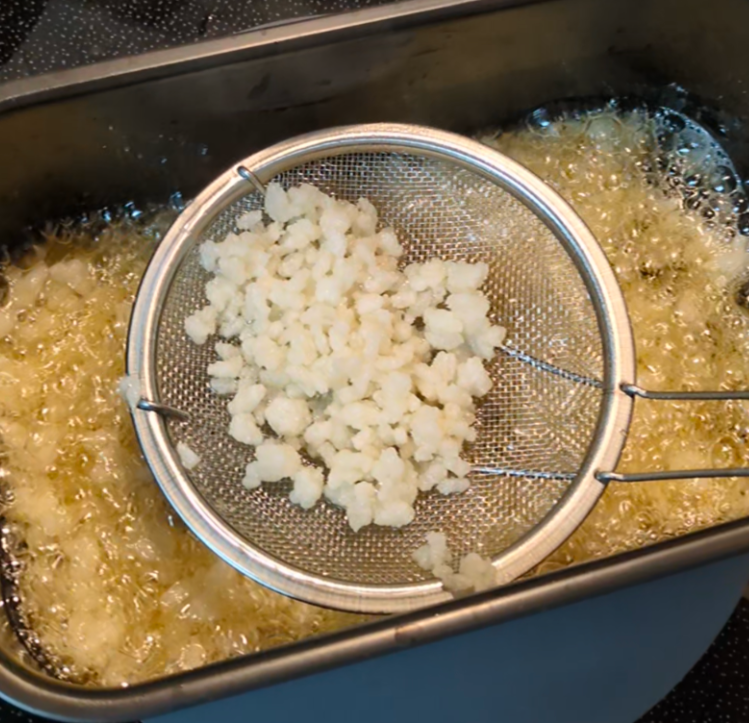
This is made by frying a separate portion of rice until crisp, then combining it later.
This step is optional and mainly for adults.
I usually skip it when cooking for children.
Extra Ingredients
- 1/2 bowl cold cooked rice
- 1–1.5 teaspoons katakuriko (potato starch)
→ I use this katakuriko from Amazon Japan: Check product on Amazon - Cooking oil
How to Make Crispy Rice
- Mix the cold rice with katakuriko until evenly coated.
- Heat oil in a pan over medium heat.
- Add the rice and stir gently.
- Fry until the grains turn light golden and crispy.
- Remove and drain excess oil.
How to Use
- Add the crispy rice at the final stage, after returning the seafood to the pan.
- Stir gently so the crispy bits do not break.
Lower-Oil Option (Optional)
If you prefer a lighter version:
- Blanch shrimp, squid, and vegetables for 1–2 minutes after preparation.
- Drain well.
- When cooking, you only need to fry the rice once with the pre-cooked ingredients.
This reduces oil usage and works well for evening meals or children.
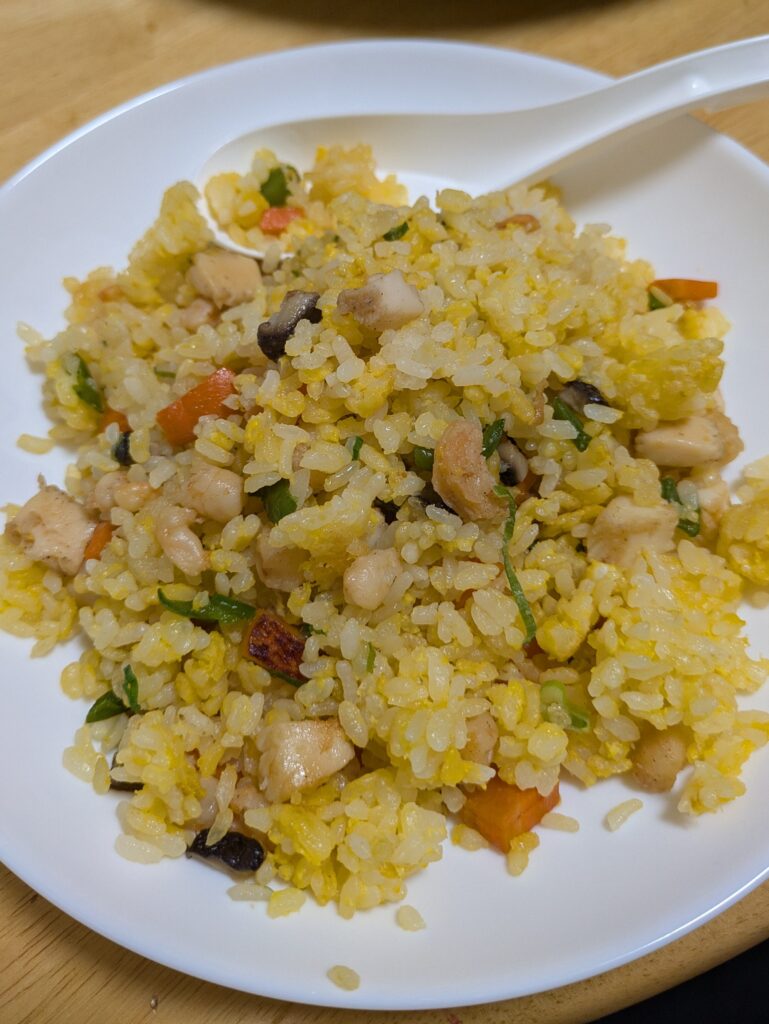
This is the seafood fried rice I cook most often at home.
It is simple, flexible, and easy to repeat during a busy week.
If you live in Japan and want to cook Vietnamese food for everyday family meals,
I hope this recipe gives you a familiar and practical option.
🍳 Looking for more easy Vietnamese home-style recipes?
Explore the full collection in Easy Vietnamese Recipes – Cook with Bean JP, where I share simple dishes and everyday cooking experiences for family meals in Japan.