
Is Being Shy Really a Problem?
When I First Realized My Child Was Shy
To be honest, before my child was born, I had no experience being a father.
I think many people are the same. When we become parents, few of us are truly prepared — not in terms of clothes, tools, or where the baby will be born, but in terms of the mental readiness and skills that come with parenthood.
Looking back, I ask myself: did I ever really think about what it meant to be a father? What kind of father would I be? How would I raise my child?
The truth is… I didn’t. At the time, there was only one feeling: I’m going to be a dad. Everything else felt like something I could figure out later. I used to think that anyone could become a parent — there was no need to think too much about it.
Because I hadn’t thought about it, when situations with my child came up, I often reacted based on instinct and personal experience. Many times, I wasn’t sure whether what I did was right or wrong. I believe many parents have felt the same way.
I’m a somewhat “unusual” father — not because I understand my child better or take especially good care of him, but because my child and I only began spending time together on a daily basis when he turned four. That was when I truly started being present as a father, watching him grow step by step. And that was also when I began to realize how difficult being a parent really is.
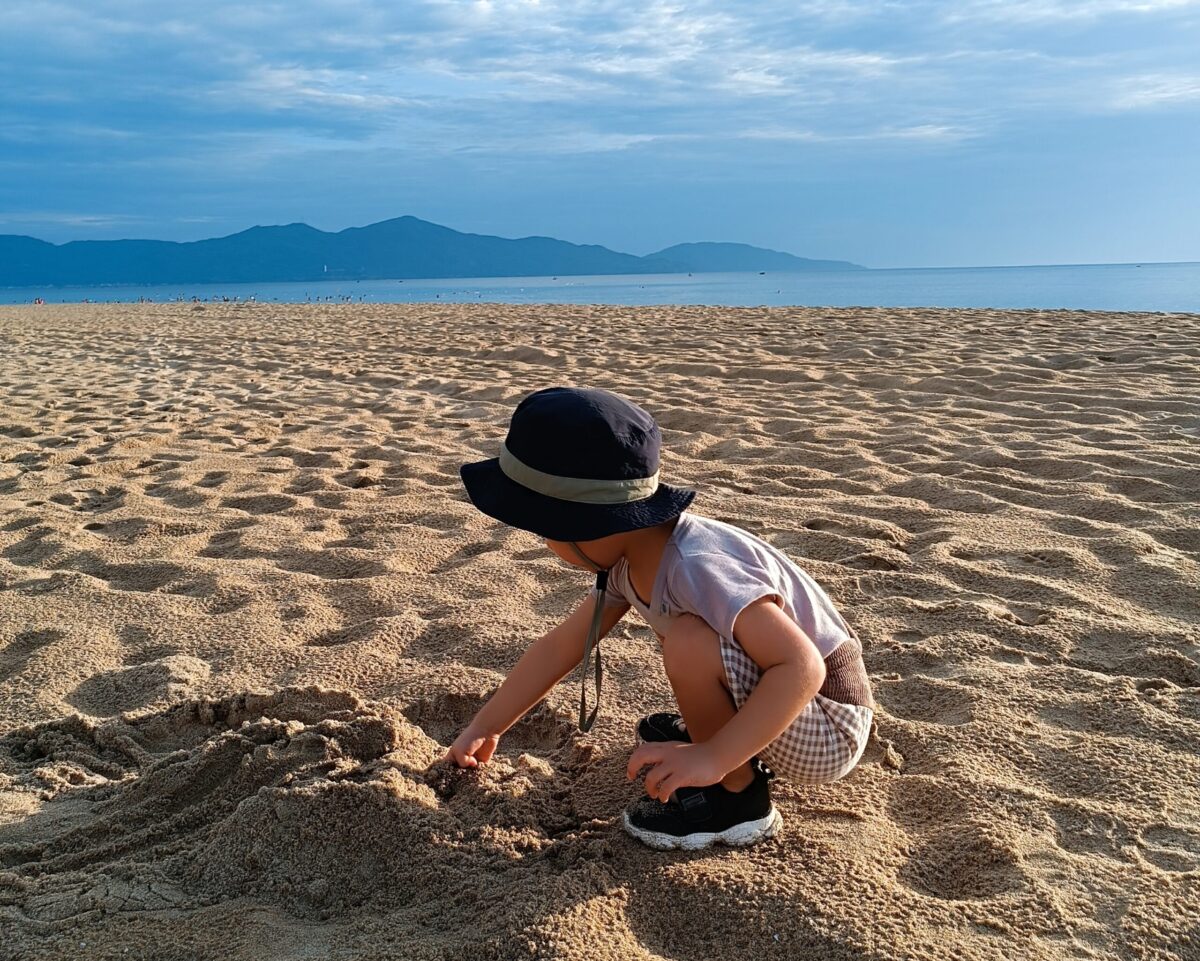
My child is a little shy, but very sweet and good at communicating. He enjoys talking with family members, but becomes extremely shy around strangers. At school, whenever there are events like performances, he often seems uncomfortable.
There was one school performance that I still remember clearly. While his classmates stepped onto the stage with excitement, my child clung to his teacher. From being a performer, he became… a spectator, sitting on the stage and watching the other children perform.
At that moment, I felt something strange. A slight sense of disappointment — followed immediately by confusion. Why was I disappointed? What was I expecting from a four-year-old child?
Looking around at other children who seemed confident and energetic, I began to worry. My child appeared more shy. More different. And I realized that perhaps the issue wasn’t just my child, but the fact that I didn’t yet know how to approach that difference.
If you were in my position, what would you have done?
The Difficulty Isn’t in the Child
After that performance, a sense of worry stayed with me. But when I calmly looked back, I realized that this worry didn’t come entirely from my child.
To be honest, I had expected my child to complete the performance “properly,” like many other children. This expectation came naturally from being an adult — but it was also an unfair comparison for a four-year-old who was still developing.
I began asking myself:
- Did I really understand what my child was thinking?
- Was he shy, or did he simply not enjoy performing?
- Were there other reasons I hadn’t noticed yet?
At the time, I couldn’t think that far. The dominant feeling was simply worry. I worried because my child seemed more shy than others his age. I worried because he didn’t match the image of what a “typical” child should be in my mind.
And then I realized something even more unsettling: was I worrying about my child — or was I worrying about my own expectations?
Perhaps the real difficulty wasn’t whether my child was shy or not. Perhaps it was that I couldn’t yet distinguish between my child’s fears and my own fears as a parent.
Shyness may not be the problem. But leaving it completely alone, without understanding it, may not be enough either.
Is Being Shy Really a Problem?
At some point, I began to ask myself: is shyness really a problem?
When I was a child, I was quite shy myself. Looking back, I don’t see that as something wrong. It was simply part of growing up — a process that each person goes through in a different way.
But as a father, I found myself carrying many adult thoughts into my child’s world. As a father approaching forty, I found myself unconsciously projecting my own experiences onto a child who was only four years old.
I began to realize that my worry didn’t come from my child’s shyness itself, but from forgetting that he was on his own unique journey.
Not every child enjoys standing in front of a crowd.
Not every child feels comfortable being watched or noticed.
Some children need time — and a sense of safety — before they are ready to step forward.
Seen this way, is shyness still something to be worried about?
Or is it a sign that we need to slow down and observe more carefully?
To observe whether a child needs time,
or whether they need someone beside them — patient enough to wait until they are ready.
This article is part of a life journey in Japan, where I record my thoughts and experiences as I walk alongside my child, slowly observing and learning to understand him better each day.
More writings from this journey will be updated and collected here:
Riki’s Story
https://beanjp.com/en/rikis-story/
Editor’s note:
This article is an English adaptation of an original Vietnamese essay.
You can read the original version here:
https://beanjp.com/vi/post/con-nhut-nhat-co-phai-la-van-de-khong/
